
- Familia Rosero’s soft premium coffee (Caturra, Castilla and Geisha varieties)
One of our main allied farmers is Familia Rosero, whose farm is located at 1800 meters above sea level (m.a.m.s.l) in the municipality of Sandoná of the department of Nariño. The family of coffee smallholders follows the concepts of Buen Vivir as they promote the growth of native vegetation along their farm, as well as other crops and livestock, such as plantanes and chickens. Their farm is an example of promotion of biodiversity and sustainable practices alongisde high quality coffee. Additionally, the family has had the support and technical assessment of the Suyusama Foundation, which is a local NGO founded by the Society of Jesus, based in Pasto, the capital of Nariño.

The Rosero family’s farm has an extension of 1 hectare and their crops are characterized for having the application of organic ferilization techniques, including the use of rock flour for the mineralization of the soils.
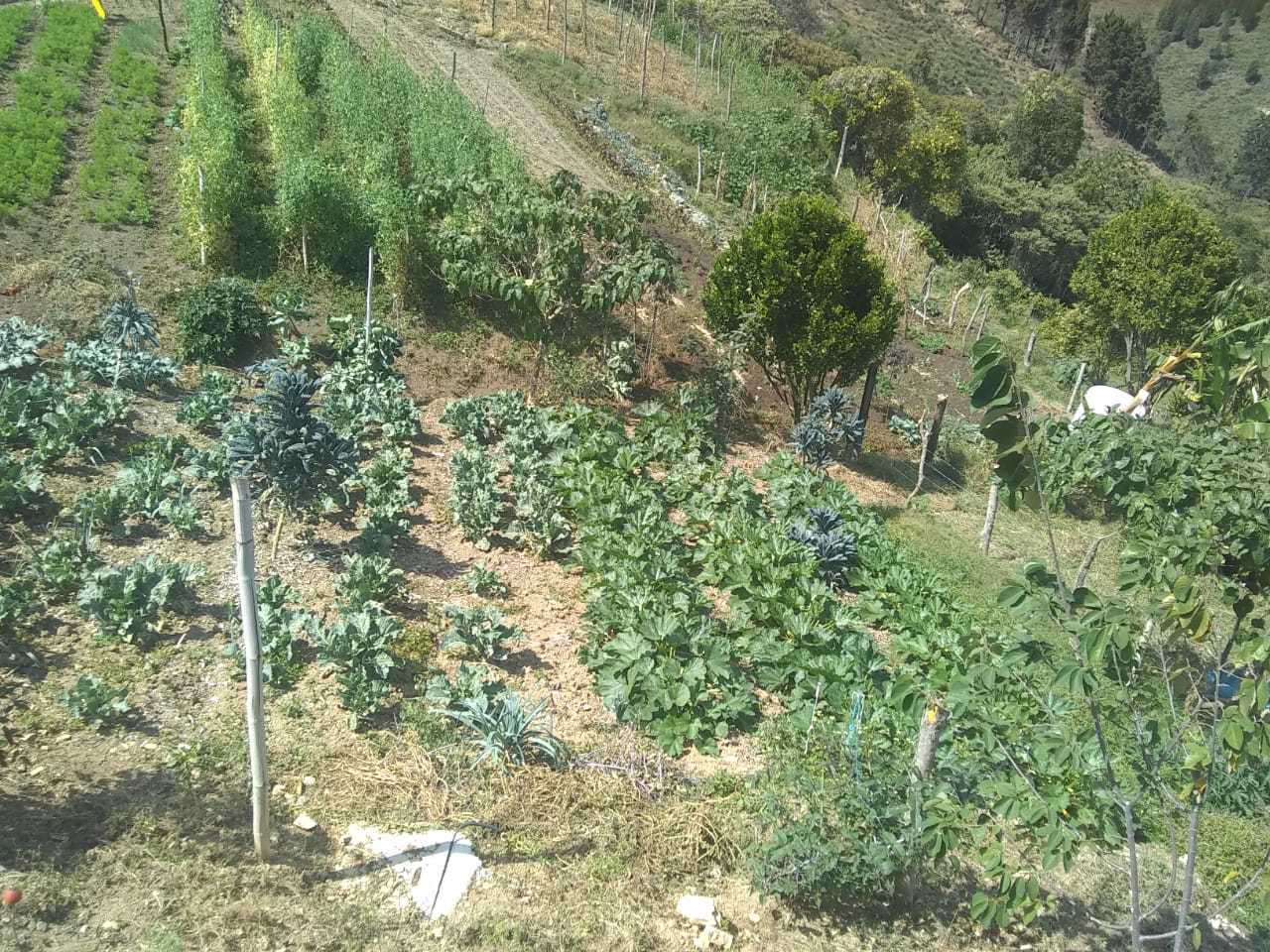

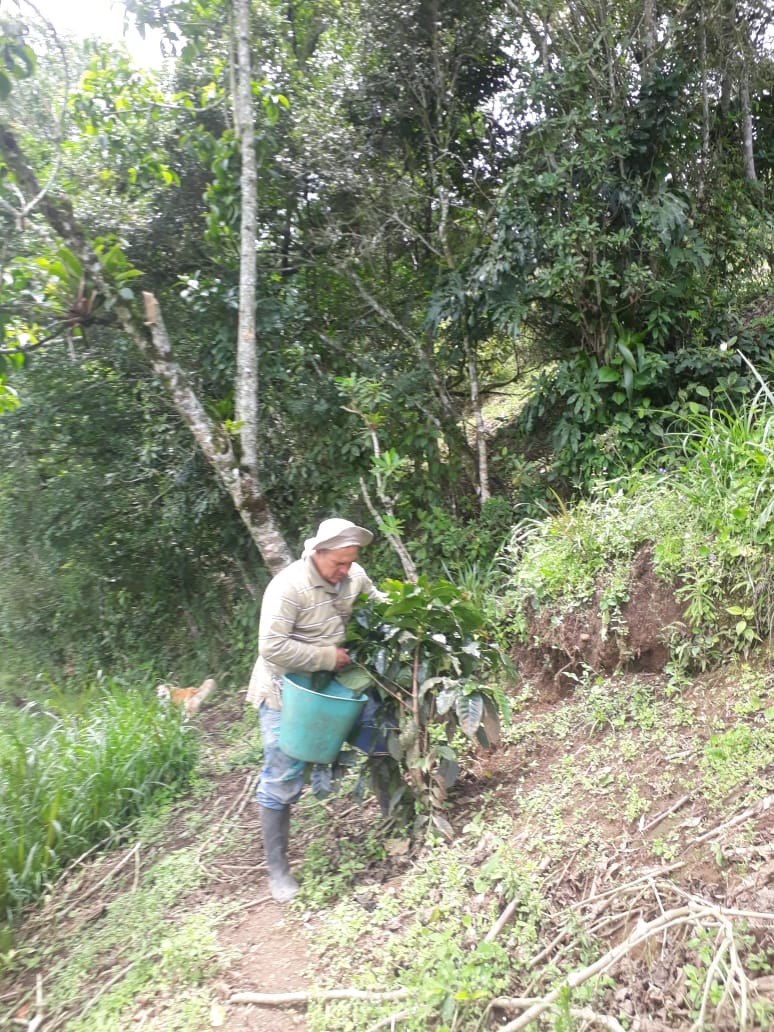


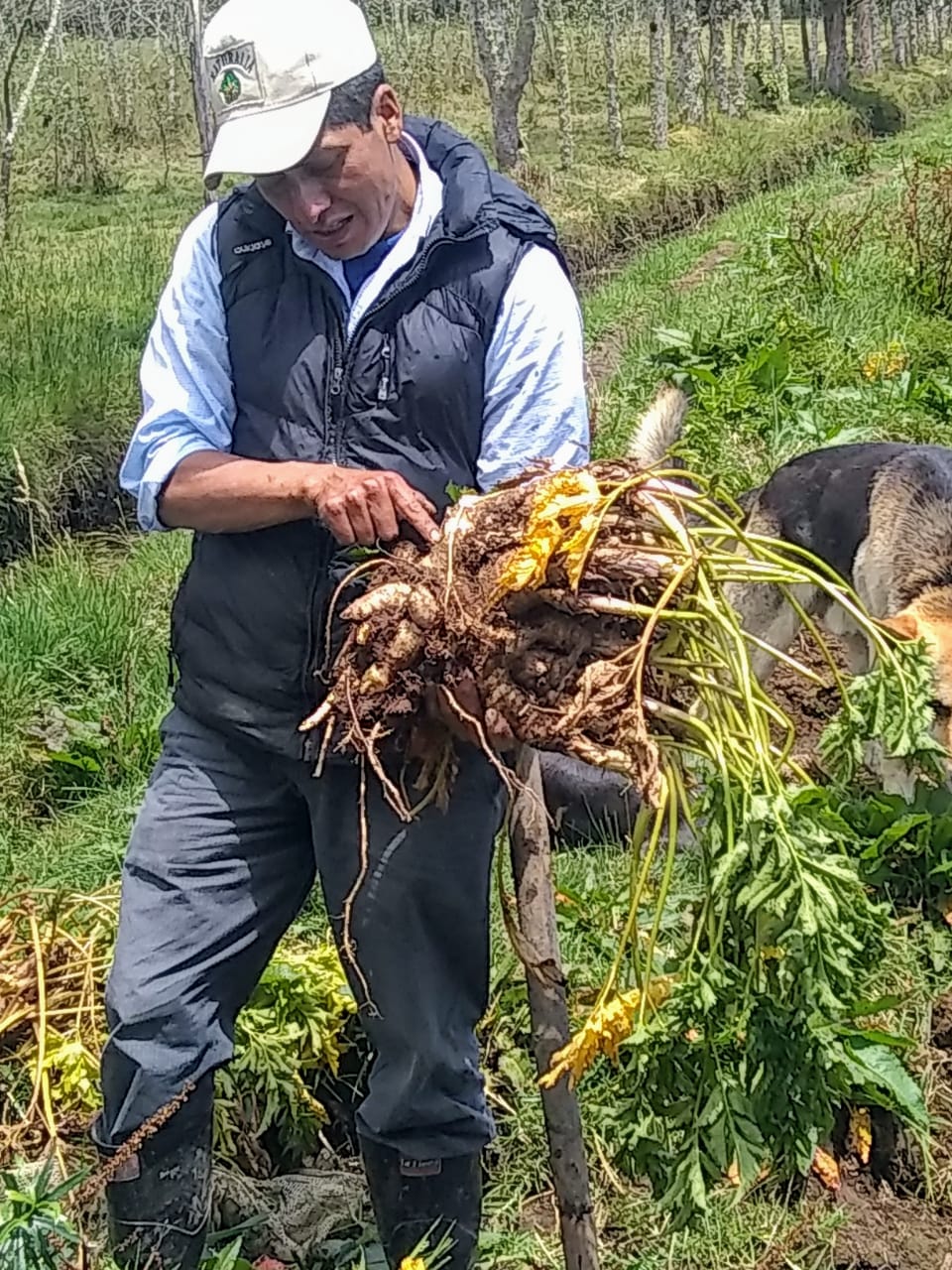
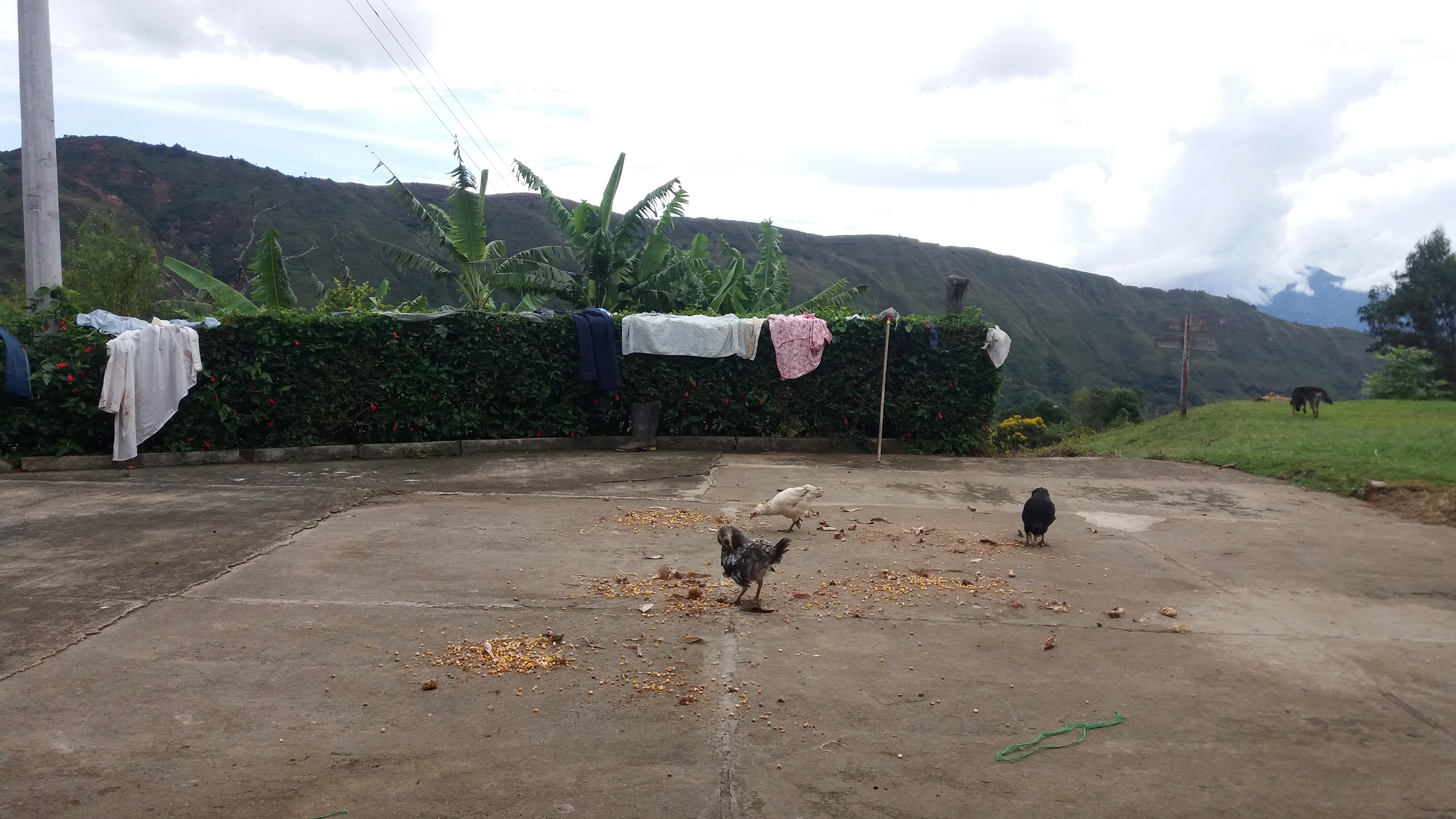
“My name is Manuel Rosero. I am a resident of the municipality of Sandoná, Nariño and I am a coffee grower. Here we have been implementing organic fertilization plans. In other words, we are producing organic coffee. We aspire that you, as a consumer, also become aware of the need to move forward with what adapting to and mitigating climate change. Our practices are in favour of agroecology. Regarding the coffee process, once the coffee is ready, what we do is harvest the red bean. Later, we take it to a pulping process. From that pulping, we obtain the cherry or the almond, which we take it to the washing, where about 5 litres are used for every kilo of coffee pergamino. We then dry it below 30 degrees Celsius, so that the embryo does not die and thus not lose the quality of the coffee and its aroma. Afterwards, we do the threshing between 10 and 12 degrees of humidity and on to the roasting. There are several types of roasts, which go according to the quality of the coffee and according to the aroma that the end consumer wants. We hope that we all become aware of our environment, and begin to advance towards facing the problem of the devastation of the planet. Also, I hope that we begin to contribute and interact between the urban and rural parts. This is, so we can move forward and hopefully extend a little more the life process on this planet.”
2. Marino Guerrero’s agrochemical free coffee (Caturra, Geisha, Borbon and Castilla varities)
In the municipality of Consacá of the Department of Nariño, Marino Guerrero grows organic coffee at an altitude of 1800 m.a.m.s.l. He has specialized in the caturra varity but still holds a few crops with Geisha, Castilla and Borbon varieties as well.

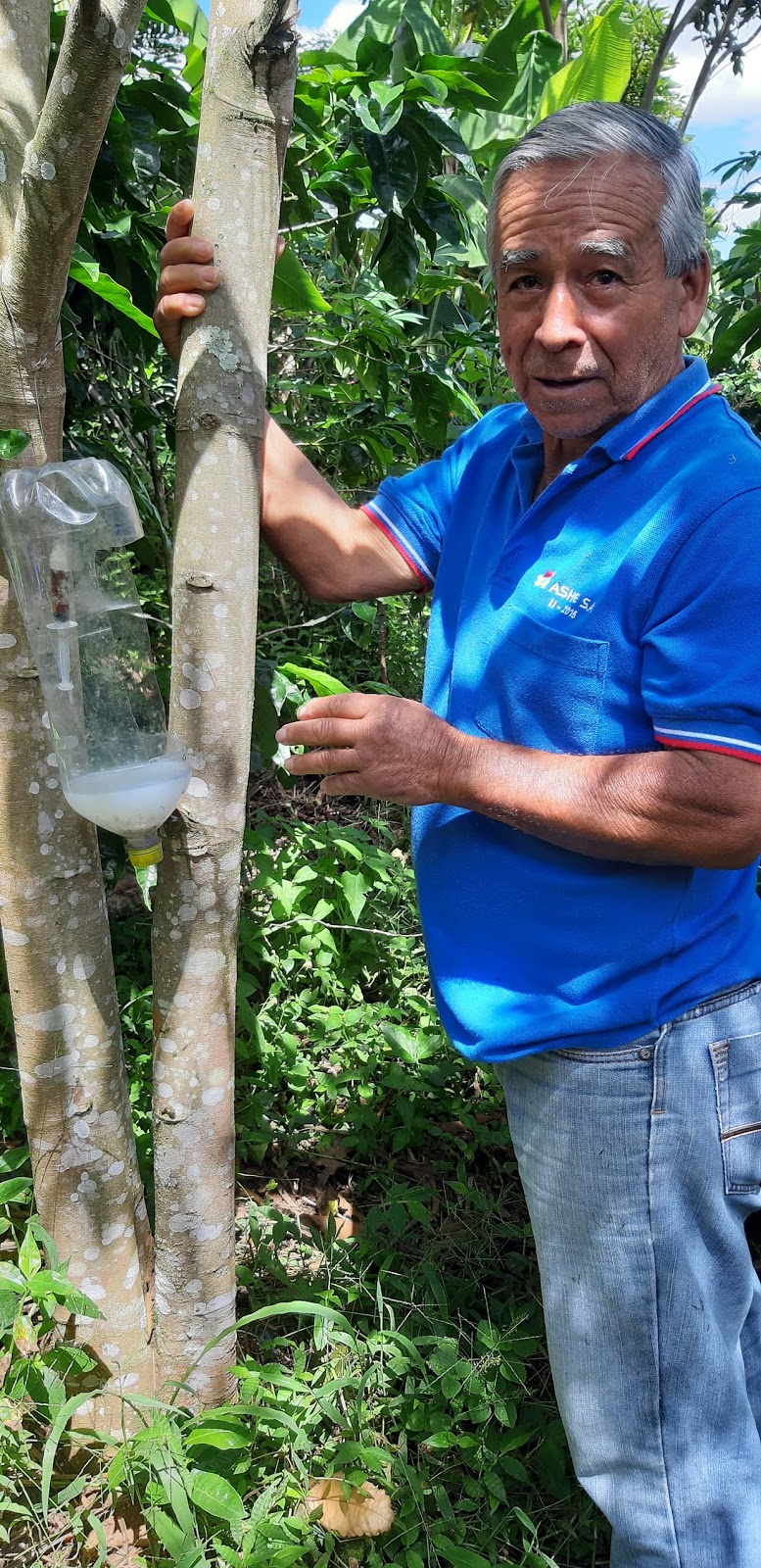


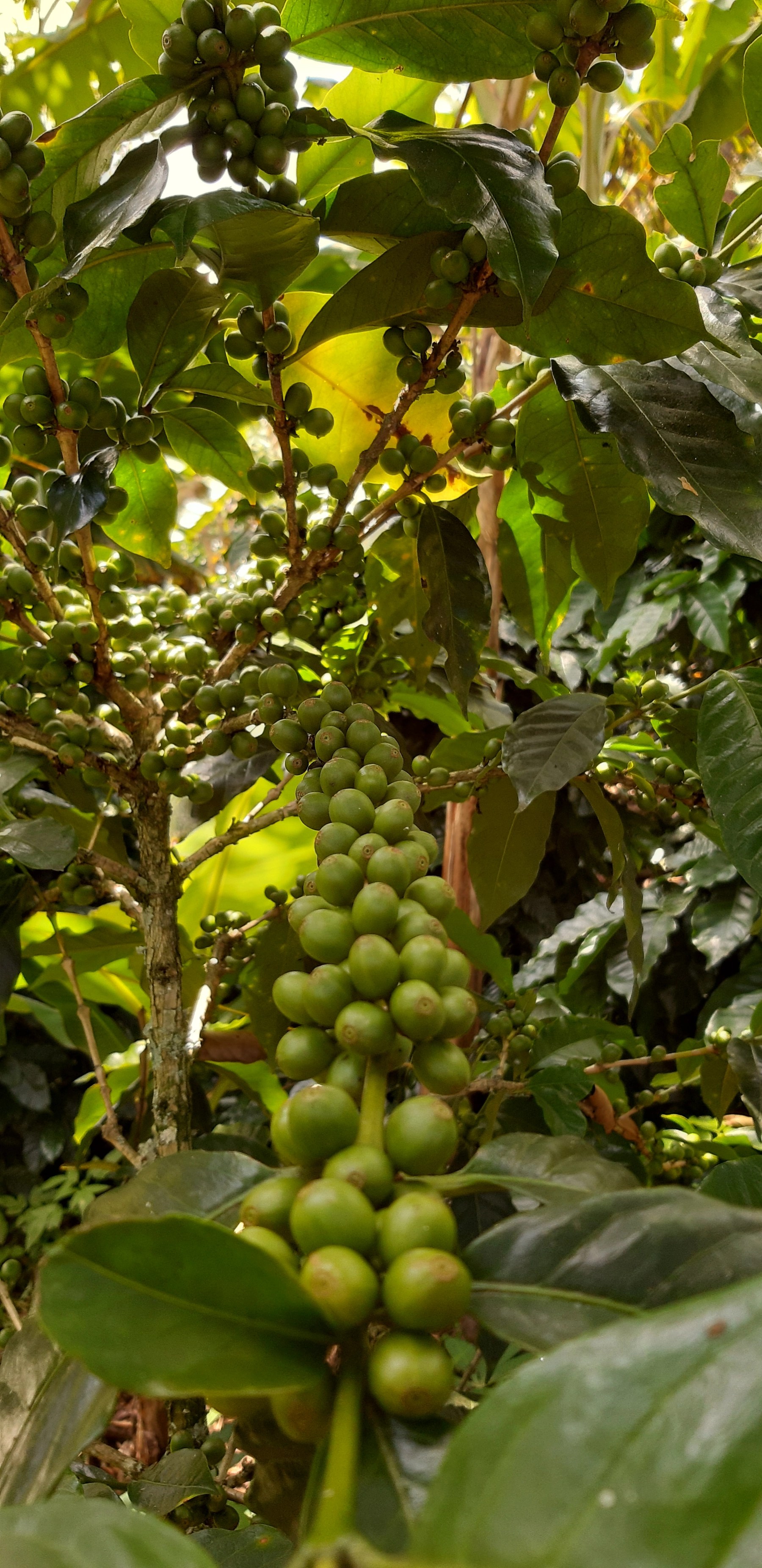

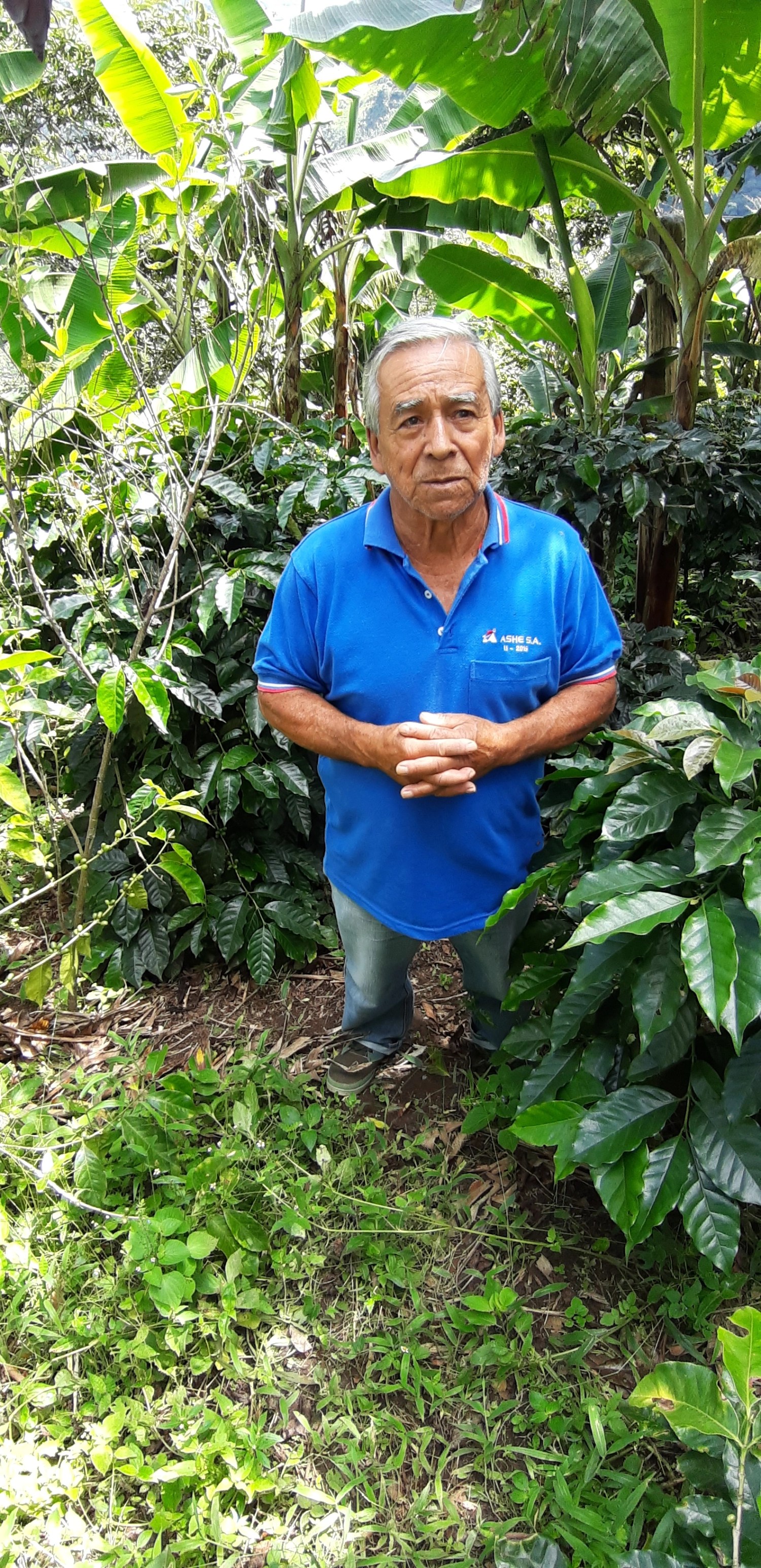
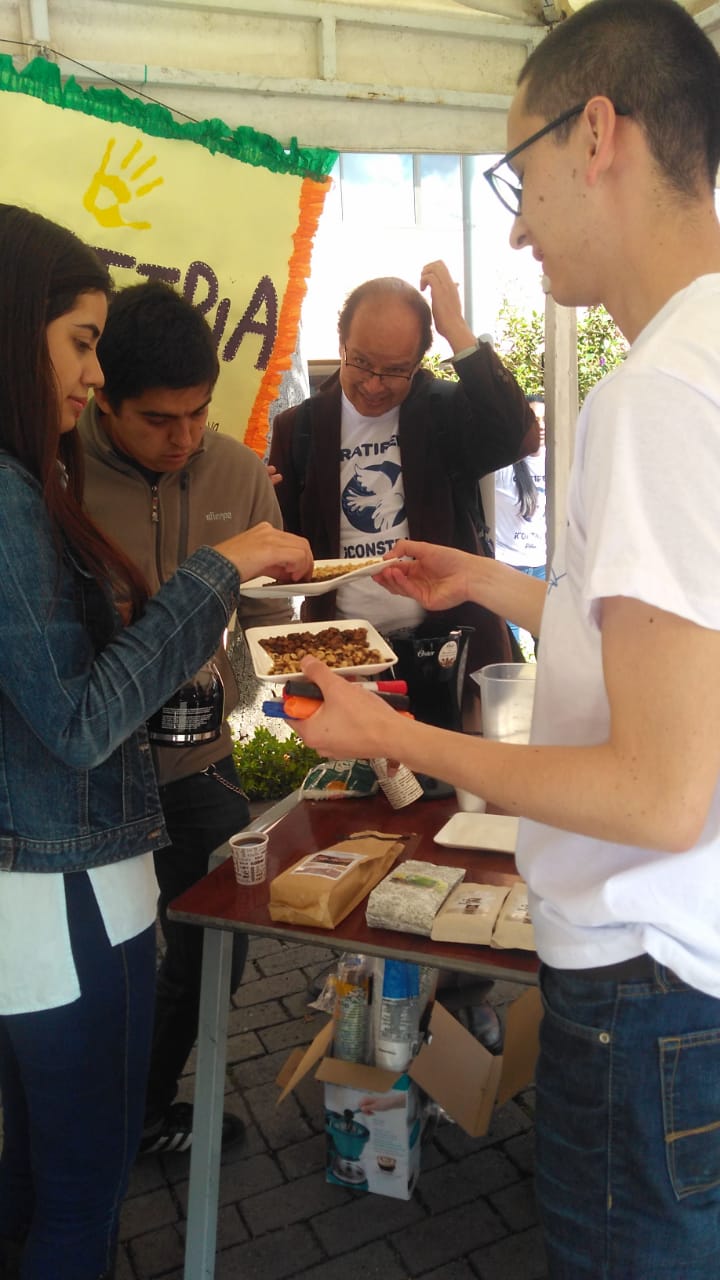
Marino has received assistance and technical advice from the Suyusama Foundation as well. Moreover, the “Corporación Ciudadanía Ambiental e Innovación Social” (Environmental Citizenship and Social Innovation Corporation in english) has commercialized his coffee in the city of Bogotá (Capital of Colombia), in the context of a social project implemented with some Universities of the city.

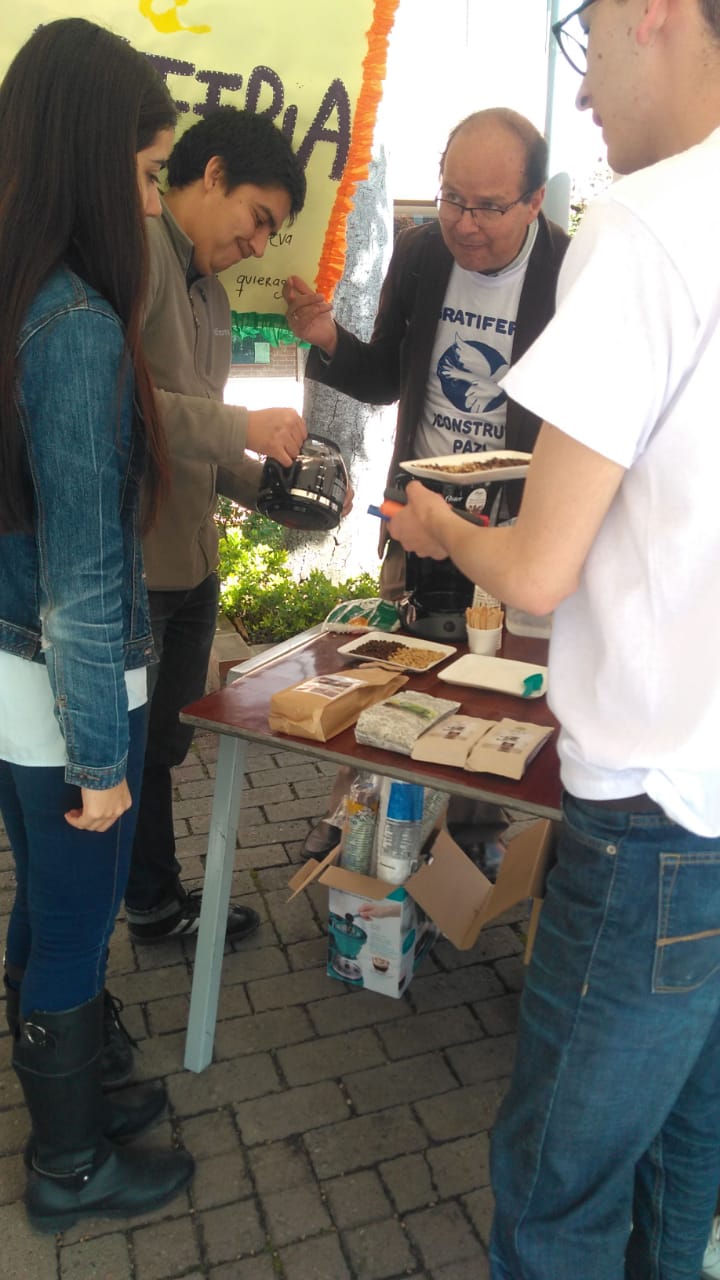

Video transcription in english:
“I am a farmer from the town of Ingenio. We are on the La Palma farm, located at a height of 1800 meters above sea level. This is a totally organic plantation, as you can see from the trees, the flowers, there in the background. A long time ago, about 12 years ago we started with this farm, when many people used to say that the production suddenly dropped if there were no chemicals. However, I have proven that it goes down very little or not at all. Actually, our production has remained the same (in quantity), but the quality has improved a lot. Hence, I would like to inviate to whoever watches this video to cheer up and start working organically.”
- What was (the farm) like before?
“When I bought it, this was a stubble. There no crops sown. Absolutely nothing. When I started planting this farm, I started to sow from scratch. For the recollection, we do not pay any workeres. We do the harvesting with my wife and we only harvest mature coffee. We do not harvest it overripe, nor pintón, nor green, and we also do not mistreat the plantation. When we bring the red coffee home, we pour it into a tank with water. All the coffee that rises, we get it out of there, because it is not of such good quality. Only the one at the bottom remains. From there, it is washed after 16 to 18 hours of fermentation, after which we take it to the dryers, which we have built so that the coffee gets dried only by air currents. The coffee does not touch the floor at any time, (we take it) directly to the drying rooms after the washing. We actually do the washing three times. When it is well washed, it is very white. The vain that arises during the washing is also removed.”
- How do you take care of the environment?
“I recycle the honeys, that is, the first wash I recycle it. Then I use it as a fertilizer for the banana, so the contamination is minimal. Also, the plantation does not have any type of chemicals and I am planting little trees all around the farm. Here, for example, I planted a Míspero, I have a Mandarin also over there. The idea is to plant more trees, of course, controlling that the coffee gets enough light. Here I have some Bourbon coffee, with which I am trying to plant several trees around it to see how the flavor and quality of the cofee may change. In this part, I have planted little lemon trees, Guamo, Guayacanes and Botón the oro. The idea is that this part becomes a whole forest.”
3. Alba Portillo’s organic coffee (Caturra varieties: Latest crop 85 points)
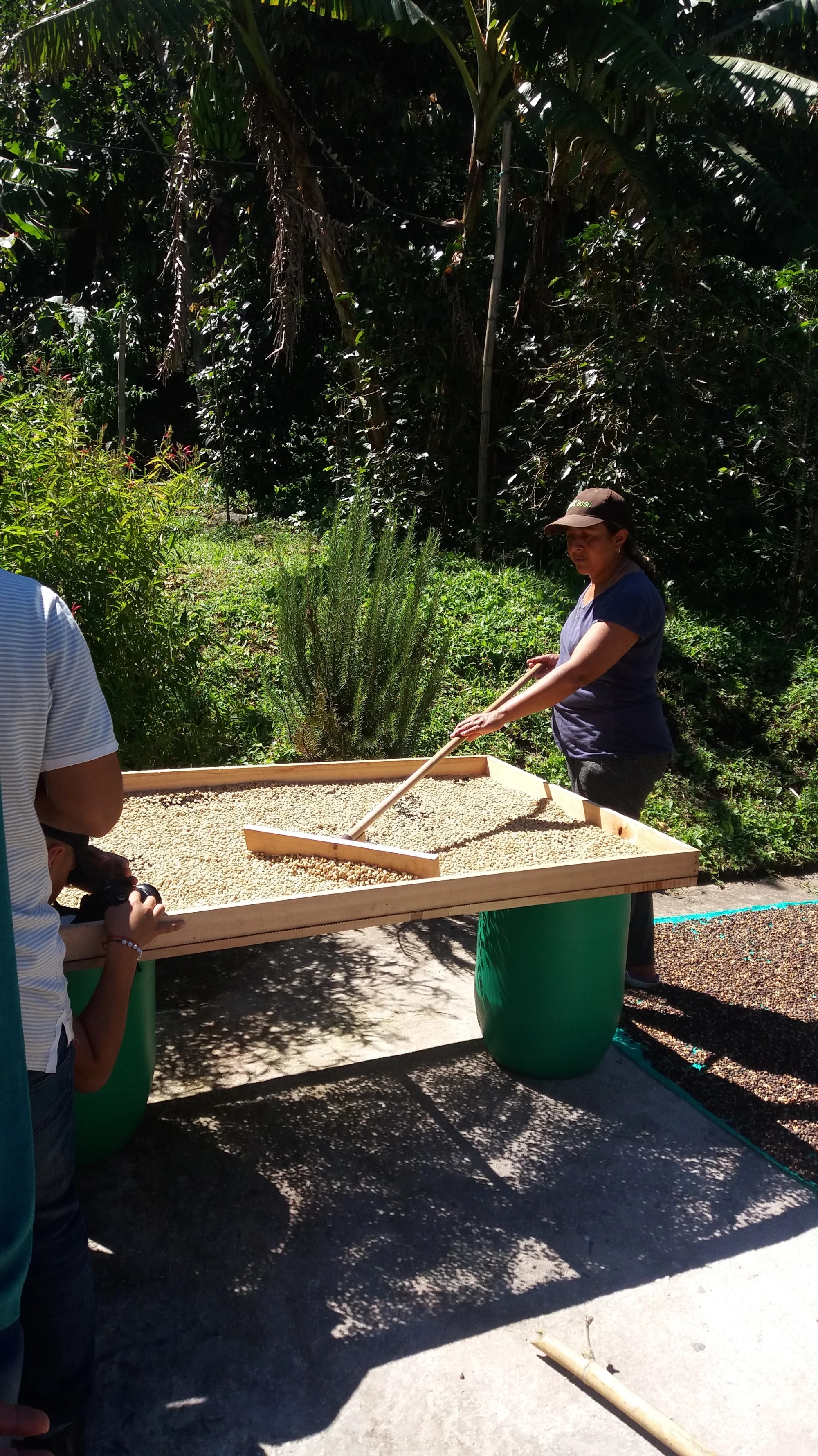

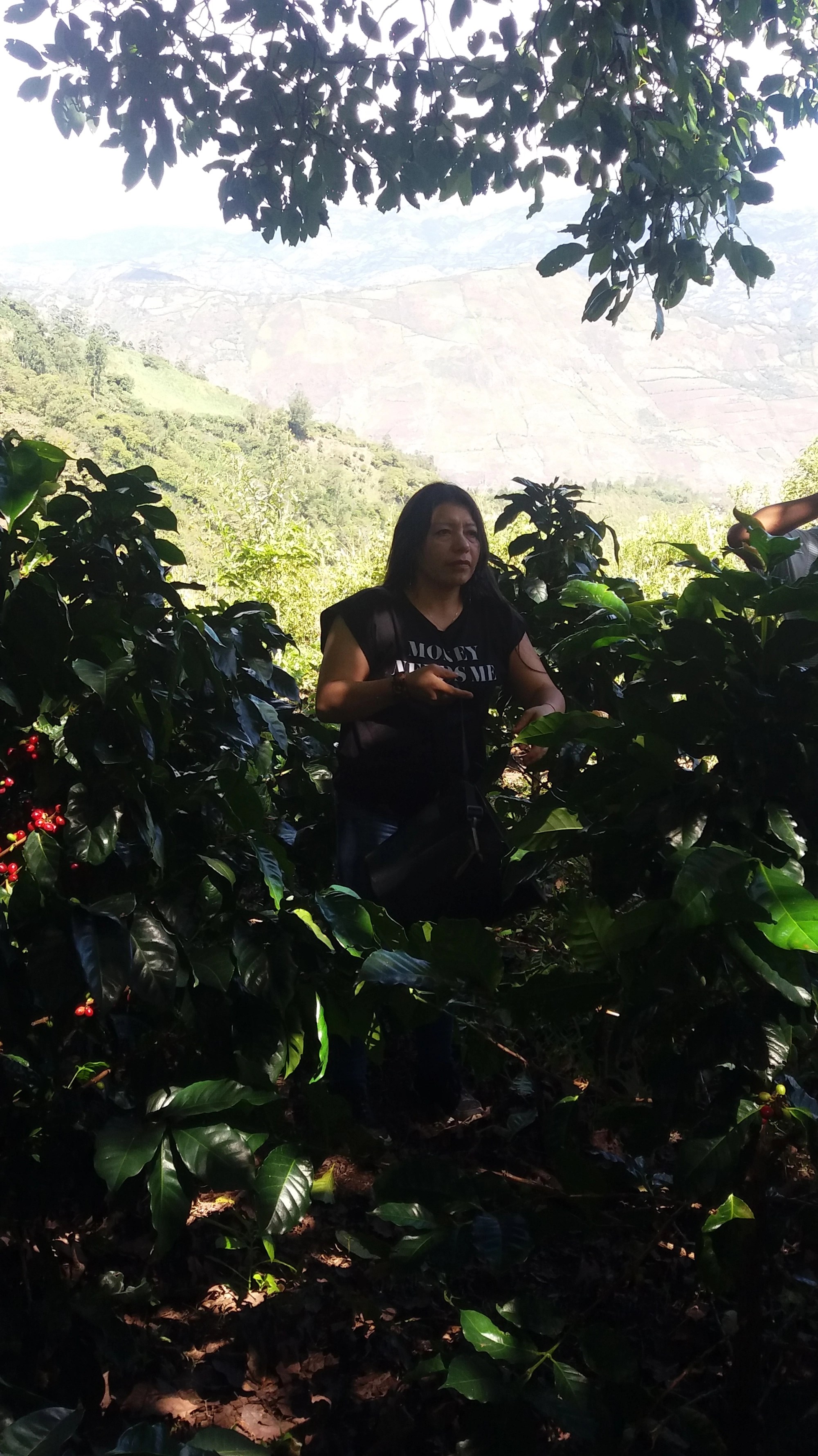

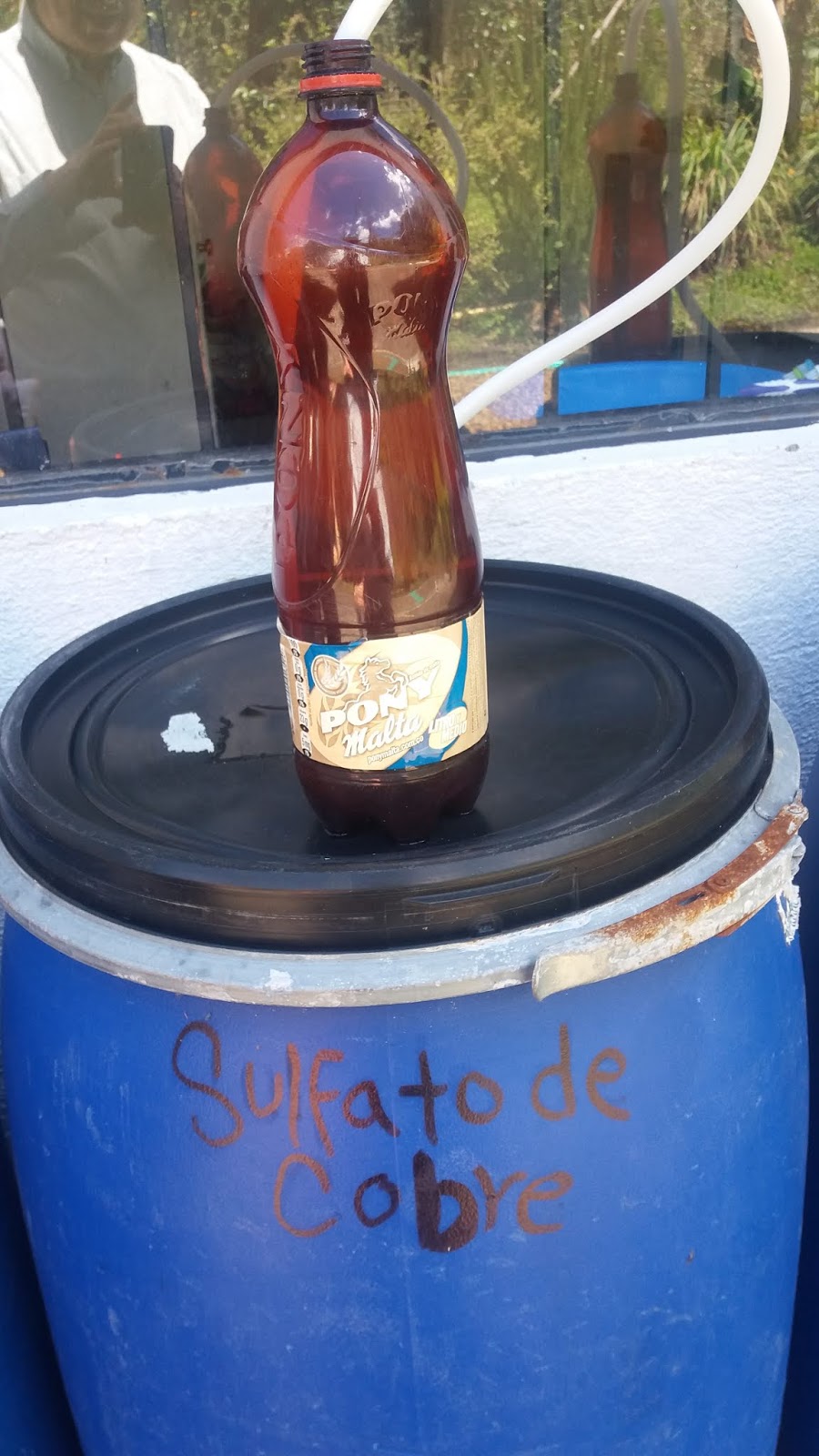
Alba Portillo and her family are coffee smallholders of the municipality of Consacá, which is well known for growing high-quality coffee through agroecological methods. Her alternative methods have replaced the use of agrochemicals since six years ago. Below you can see in one of the pictures, that she uses Copper sulfate as an agroecological technique to protect the plants from fungus, plagues and as a method of sustainable fertilization.


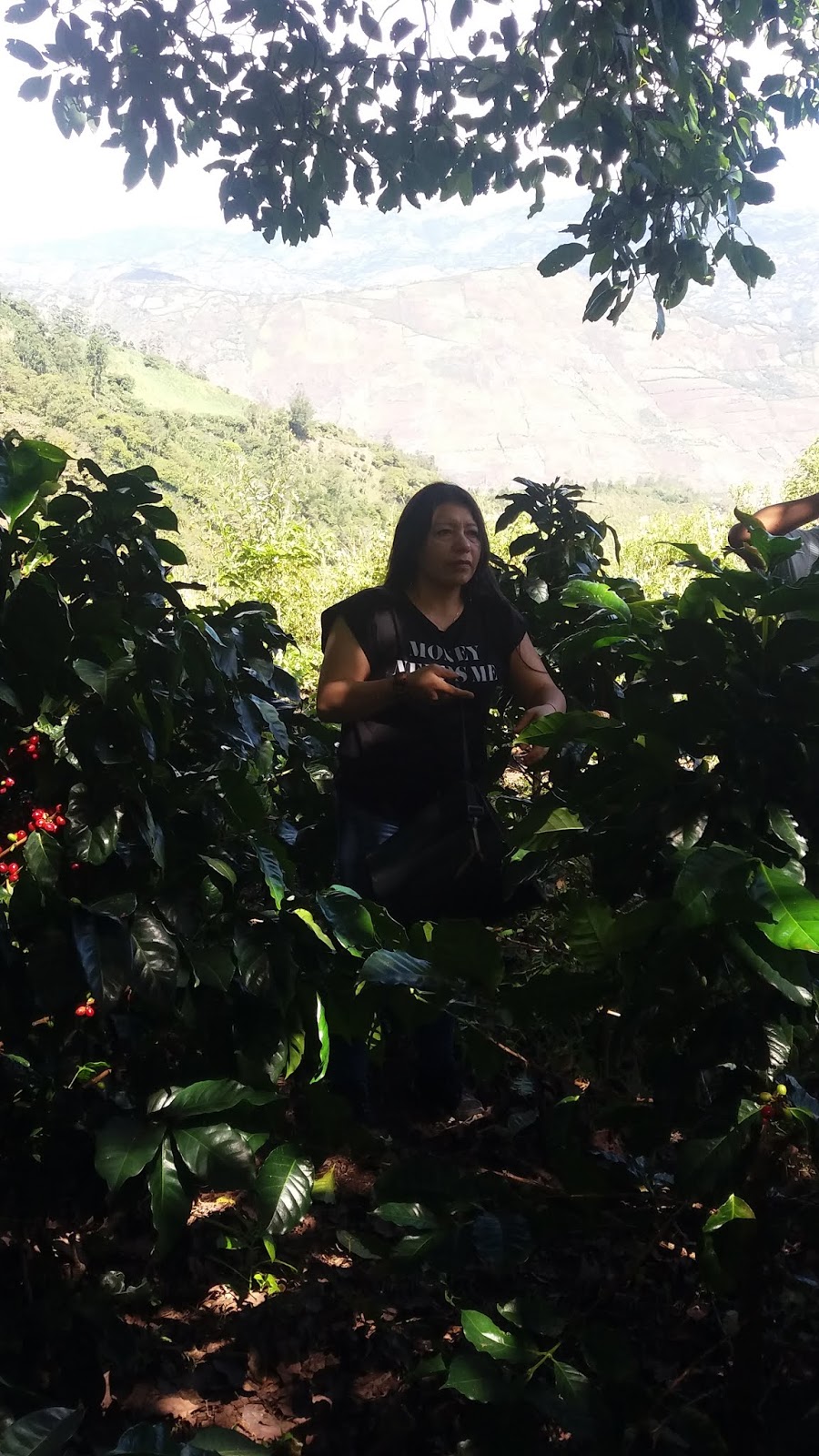


Alba and her family are members of the worldwide network “Red de Guardianes de Semillas” (Seed guardians in english), that comprises of an international association of farmers and activists who aim to rescue native crops and promote agro-biodiversity as opposed to monocrop and agroindustrial techniques.

Video transcription in English:
“Well, my name is Alba Marleni portillo Calvache and I am a coffee producer. the coffee we are producing is of the Castile variety. It is agroecological. We use agroecological production techniques, where biodiversity, water and soil are conserved. Additionally, because of these techniques, we are able to produce good quality coffee. The coffee is produced at a height, more or less of 1800 (meters above sea level). The farm is located in Consacá, more precisely on the Churupamba village. The coffee itself has an average rate of 85 points. Furthermore, the whole farm is designed in a permacultural way. There is a conservation area where the streams, that is, the Churupamba stream and the Azulfra stream are preserved. Additionally, in the soil conservation process, we are adding coverage of both living and dead elements, including microorganisms to enrich the soil. In the same way, we have mineralized the soil and are applying some important elements to maintain the balance and conservation of the soil to promote sustainability in the longer term. Above all, we articulate the issue of plant coverage and agrobiodiversity so that coffee is not grown as a monoculture and other types of food can be produced.”
 Cafe Sarralde